download monthly pdf

Total Pageviews

Search This Blog

Friday, July 31, 2015

Another Kind Of Welfare

In ‘A state only in name’ (The Indian Express, July 13), Rakshita Swamy prima facie(clearly,प्रत्यक्ष) dismisses cash transfers as undesirable, and lists out problems without defining what kind of cash transfers she is referring to. This is a position that is difficult to sustain because transfers such as pensions and scholarships have long been part of our welfare system.

There are two types of cash transfers: conditional (CCT) and unconditional (UCT). CCTs require a demonstration of tangible(touchable,वास्तविक) behavioural outcome for the cash transfer to be made. UCTs are not linked to behavioural outcomes. Some criteria may be applied to select the target group. One radical form of the latter, unconditional basic income (UBI), now being discussed widely, is, in fact, universal. There are several pilot projects on UBI across the world, and one such was done in India recently by Sewa. The results of this pilot study have been quite positive.

The term that has been in the news recently is “direct benefit transfer” (DBT). This is meant to make the transfer of some welfare benefits transparent and more efficient. DBT has been successful in the case of LPG subsidy and, in one year, the government has been able to save as much as Rs 12,000 crore.

While DBT is aimed at improving the efficiency of the management of subsidies, UCT or UBI is an alternative way of thinking about welfare assistance itself. It is an attempt as much to improve delivery as it is to address inclusion and exclusion errors that plague(bother,परेशान) the current targeted social assistance.

Swamy takes none of these nuances(a subtle difference in meaning,सुक्ष्मभेद) into account and asserts that “Cash transfers are now being positioned as a magic solution to achieve development goals in health, education, nutrition and food security...” What type of cash transfers is she referring to? And who is positioning it as a magic solution? Which of the pilot studies say so?

Chief Economic Advisor Arvind Subramanian has said DBT is a “gamechanger”. As far as subsidy management is concerned, this is indeed true. Saving nearly $2 billion  without hurting any of the stakeholders certainly qualifies for a gamechanger. Further, Swamy says “...the chief economic advisor went as far as saying that cash transfers could be a means of enhancing the legitimacy of the state. The irony(satire,विडम्बना) is only too obvious.” I don’t see what is ironic about Subramanian aspiring to find mechanisms that legitimise the state. We all want our government to spend our tax money more efficiently, don’t we?

When the national average of pilferage(steal small amount,चोरी करना) in the PDS system is 48 per cent, is it not something we should all worry about? When the government officially proclaims that India spends Rs 3.65 to deliver welfare subsidy worth Re 1, should we not feel ashamed and search for alternative methods of delivery? Instead, Swamy brushes aside the issue of pilferage and leakage, and vaguely(unclear,अस्पष्ठ) says that there are several “other reasons”, again unsubstantiated, which are responsible for the welfare programmes not reaching the people.

The writer goes on to say that getting money into the bank is not the same as getting money into people’s hands. This is hardly profound. Any cash transfer indeed requires a robust(strong,सुदृढ़) banking infrastructure and complete financial inclusion. Swamy concludes by making yet another sweeping statement: that the motive behind the push for cash transfers is basically a conspiracy(unlawful act,षड़यँत्र) to privatise. There is little that one can learn from such unexamined statements.

If subsidy is what is in question, DBT is indeed an efficient method that tackles pilferage and black-marketeering. Coming to UCTs, the pilot studies have clearly shown that they can play a very important role in addressing poverty; that they stimulate the local economy; that they can bring about a certain dynamism(energy,जोश) into the lives of the poor; that they have a multiplier effect on the household economy. UCTs need not replace the existing welfare system altogether. It can be an important part of the welfare basket. What we really need now is an informed debate on these issues rather than knee-jerk(natural,स्वाभाविक) reactions and unformulated ideological positions that get us nowhere.

Read more »

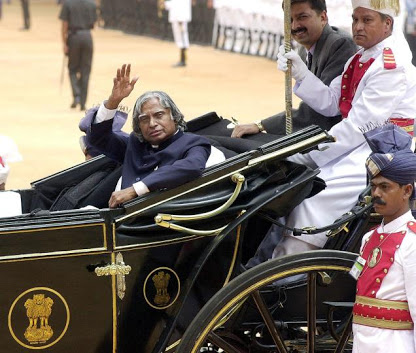
The Kalam I knew

‘Simple living and high thinking’ exemplifies the life of Dr. A.P.J. Abdul Kalam more than of any other leader I have come to know in my more than five decades of public life. I got to know Dr. Kalam in 1992 when we used to sit in the official gallery of Parliament — he as Scientific Adviser of Secretary rank and I as Secretary in the Ministry of Parliamentary Affairs. I had a reserved seat, as I had to frequently go to the gallery to take note of the proceedings. One day, I saw Dr. Kalam in my seat, and someone pointed out to him that it was my seat. He immediately started to move to the next seat without any fuss(hassle,चिंतित) and it was with great difficulty that I persuaded(agree,मनाना) him to remain where he was. We became friends since then; he frequented the gallery as much as I did, to send information to the Prime Minister and Defence Minister concerning his subjects.

Years later, in 2000, when I was Governor of Odisha, I was invited by the Madurai Kamaraj University to deliver the convocation address. I jumped at the opportunity when they told me that Dr. Kalam was going to be conferred an Honorary Doctorate at the convocation. The two of us got a good opportunity to discuss many things, including the points I made in my address. He did not, however, accept my suggestion that he speak on the occasion. He said it was my day.

Distinguished guest

A few weeks before he became President, Dr. Kalam visited Bhubaneswar to deliver a lecture. The organisers asked if I would host him in Raj Bhavan, as there were security issues in putting him up elsewhere. I readily agreed. But Dr. Kalam insisted on staying in the simple home of the organisers rather than at Raj Bhavan. He felt that the people who wanted to meet him may not have access to him in Raj Bhavan. Later, when he found out that I had looked forward to hosting him, he insisted on personally calling on me to explain why he had not accepted my hospitality. It was again a great meeting during which we discussed several topics, particularly about the potential of the youth to shape the future of this country. After 45 minutes, I walked him to his car to see him off, little realising that he would soon be my boss.

I have pleasant memories of Dr. Kalam’s frequent visits to Wheeler Island in Odisha, when he was in charge of missile launches. He would often fondly recall the times he sat in his room listening to the chirping of birds. This, he said, gave him inspiration for the hard work that lay ahead. In one of his first visits to Odisha as President, he wanted me to organise a meeting with students without the teachers. He spent an hour interacting with them on various topics, particularly science, asking them questions and explaining concepts in great detail. He also encouraged the students to ask him questions and patiently answered them, much to their delight. He saw every student as a valuable potential resource for the development of the country, his primary goal. He wanted a developed India by 2020.

As Chancellor of Universities in Odisha, I had invited him to deliver convocation addresses in three universities, and he willingly accepted. In convocations, the practice is to seat important guests in the front rows and the graduating students behind them. After the convocation, Dr. Kalam went straight to the students, barely stopping to greet the other invitees. He also requested that in future students be seated in front, with important invitees at the side. After that, we meticulously(carefully,सतर्कता) followed this arrangement. The last convocation he participated in was at Sambalpur University, where his idea to start a herbal garden in each university — to make young students aware of the rich wealth of herbs in India — had been implemented. I invited him personally, but he had pressing commitments. Not wanting to miss an opportunity, I scanned the appointment diary he showed me and found a date that was mutually acceptable. When he came, he was delighted with the herbal garden.

Another time, at a banquet held in his honour in Raj Bhavan, he relished(enjoy,पसंद) a brinjal and curd preparation, saying it was his favourite dish. The Odisha Chief Minister told him that my wife painted Saura tribal art. He immediately said he wanted to see them, went to the lounge where they were displayed, and appreciated each painting keenly. The next morning, he mentioned one particular piece that he had liked very much and my wife promptly volunteered to paint a similar one for him. She later gifted it to him during one of our visits to Rashtrapati Bhavan, on the condition that he would treat it as a personal gift that he would take with him when he left.

A hospitable President

Though a strict vegetarian by choice, Dr. Kalam never imposed his preference on his guests. He threw a banquet in Rashtrapati Bhavan for the Governors attending the Governors’ Conference, and took care to see that the best meat dishes were served. I found out later from his personal staff that each item in the menu had been personally chosen by him. That was the kind of generous hospitality that he extended.

The two and a half years that we worked together, when he was President and I was Governor, were excellent. There are many things I have learnt from him. He was never overbearing, always listened to anyone who had a good idea, and was absolutely dedicated to achieving the goal of a developed and prosperous India. For this, he was willing to work for long hours, often past midnight, after which he would take a walk in the Mughal Gardens. This placed his security staff under great strain, but they would gladly accompany him, knowing how much their boss loved them.

Indeed, India was fortunate to have had as its President a role model of the highest integrity, diligence(hard work,कर्मठता) and devotion to duty. May his tribe increase.

Read more »

An impact that will endure

Abdul Kalam’s passing has seen a national outpour of grief. This emotional unity in a diverse India is rare in peacetime. No other public figure endeared himself to all sections of society and influenced the minds of millions as Kalam did in the past three decades. The sense of loss Indians feel at Kalam’s death is palpable(touchable,स्पर्षग्रह) and transcends(surpass,आगे बढ़ना) the traditional divisions of caste, region, religion, language or political affiliation.

Kalam achieved outstanding success from humble beginnings. The story of his remarkable life is known to every Indian schoolchild. Given our societal attitudes and lack of access to quality education, it is extremely difficult for Indian children not born to privilege to fulfil their potential and make a mark in life. Millions in India saw in Kalam the hope of fulfilling aspirations and achieving eminence(high status,उत्कृष्टता) in their chosen field. He kept urging(motivated,प्रेरित) young Indians to break out of the shackles(restriction,बंधन) of poverty and tradition, to dream big, and to work hard to fulfil their aspirations. And he always linked individual aspirations with national greatness. It is this consistent articulation(mention,व्याख़्या) of individual growth with public good that has left an enduring impact on most Indians, particularly students and youth.

Kalam had many endearing qualities. His utter simplicity and shunning(avoidance,कन्नी काटना) of pomp(show off,दिखावा) and privilege touched the hearts of millions in a society used to arrogance of power. It is customary in India for those in office to display their trappings of power, distance themselves from the people, abuse public office for private gain, live ostentatiously(showily,दिखावटी), have airs of superiority and foster(promote,बढ़ावा) a VIP culture. Kalam was refreshingly different, and in recent decades was exceptional in his humility, simple life, common touch and speaking straight from the heart.

Indians have developed a great distaste(dislike,अरुचि) for traditional politics and partisan bickering(quarrel about small thing,कहासुनी). Kalam was a symbol of non-partisanship. He was remarkably devoid(free,रहित) of malice(unease,बेचैनी) and pettiness(narrowness,संकीर्णता). Those who knew him well won't be able to recall a single comment of bitterness or prejudice in his private or public utterances(vocalization,कथन). He transcended caste, religion, region and language, and represented the best in our society.

Tireless energy

Throughout his long and distinguished life, Kalam retained a child-like curiosity and enthusiasm. His infinite capacity to absorb new ideas and learn, and readiness to spread sensible ideas and successful models made him a great communicator and teacher. Young or old, men or women, all audiences could easily relate to his simple, straight message. By his own estimate, he directly interacted with over 20 million people, mostly students and youth, over the past two decades. The fact that he collapsed and died as he was interacting with students in Shillong at the age of 83 demonstrates his tireless energy and his identification with all languages and regions of India. This poor Muslim boy from coastal Tamil Nadu became a true symbol of the diverse, multilingual, multi-religious India of many layers and many diverse strands.

Perhaps Kalam’s most impressive quality was his robust(strong,मजबूत), undying optimism. He had great faith in the power of technology, and passionately believed India could achieve greatness if we harnessed(control,in use,काम में लाना) our opportunities and pursued a path of common sense. His broader priorities and prescriptions for economic growth and national greatness are practical and attainable. He relentlessly(continue,लगातार) focused on agriculture, food processing and urban amenities in rural areas; infrastructure, in particular, reliable and quality electricity accessible to all; quality education and healthcare for all to give real opportunity to every family; information and communication technologies; and critical technologies and strategic industries related to defence, space and nuclear sectors.

He was not a prophet of doom. He was an eternal optimist and problem-solver, who always saw possibilities and opportunities for the nation. His vision of India emerging as a developed economy within a generation and occupying her rightful place among global giants(large,big,बड़ा) captivated the nation and electrified the imagination of youth. His vision of national greatness was rooted in improving the living conditions of all Indians. Again, he always sought to establish the link between prosperity and a better life for all Indians and national greatness. It is these personal qualities and his simple, direct message relevant to our age that made him the icon of the younger generation and the much-beloved elder statesman that he was. That is why he became the authentic symbol of a resurgent, aspirational India. And that is why he wielded(maintain,चलाना) influence way beyond the offices he held. In recent decades, he stands tallest in terms of the real influence and impact he had on the minds of tens of millions of people.

It would be no exaggeration(overstated,अतिशयोक्ति) to say that in his own quiet, simple way, Kalam in recent decades emerged as a great nation-builder. He defined new nationalism for an emerging India. Our sense of nationhood was fashioned by Mahatma Gandhi and our freedom fighters during the national movement. It was largely based on opposition to colonial exploitation, the rejection of racial prejudice of an alien ruler, rediscovery of our past glories and civilisational strengths to shore up our self-esteem, and the deification of Mother India to build unity and patriotic fervour(energy,जोश).

Gandhiji, more than any other Indian, built a nation out of disparate, diverse groups, castes, religions, languages and regions. His feat was unique and unrivalled in the annals of world history because there has never been a nation as complex and diverse, and living in as many different layers — spanning from the 17th century to the 21st century — as India. In the past three decades, Kalam helped redefine this sense of nationalism to suit current needs. In this day and age, nationalism has to be based on unity transcending diversity, the fulfilment of aspirations, giving opportunities for growth and prosperity to every child irrespective of birth, the liberty of all citizens irrespective of caste, gender or religion, and respect for universal human values and rights.

Lasting legacy

Kalam’s most enduring and important legacy will be the fostering of this sense of new nationalism and the robust optimism in India’s quest to fulfil such a vision. Undoubtedly there is a vast gulf between Kalam’s and India’s collective vision and dreams, and the rickety, quarrelsome, inefficient, often corrupt political culture and governance institutions. We need to do a lot, and quickly, to bridge this chasm and make this dream of national greatness and opportunities for all a reality within two decades. Our moribund(not growing,मृत), partisan, corrupt political process driven by mindless lust(desire,इच्छा) for power without purpose needs to be transformed. Politics must once again become a noble endeavour with a purpose, as Mahatma Gandhi envisaged(imagine,सोचा).

Our bureaucracy must be imbued(fill,व्याप्त) with a sense of purpose, and must become an instrument for delivering services and achieving goals for the public good. We need to give back power with accountability to communities, organisations and institutions at every level so that the best impulses prevail, talents are harnessed, and leadership in every sphere is nurtured. As a people, we must rediscover the capacity to pay a short-term price to promote the prosperity of the next generation and enhance long-term public good. And we need to remind ourselves that the nation is above self, and above accidents of the womb and the many sectarian divisions that continue to plague(bother,परेशान) us.

Gandhiji gave us a sense of nationhood. Kalam endeavoured(effort,प्रयास) to inject optimism and show us a practical roadmap. We can, and will, fulfil our national destiny and give opportunity to every child and wipe every tear from every eye, as Mahatma Gandhi had hoped and Kalam dreamt.

Read more »

Interpretive remedies in NJAC case

After 31 days of argument, a five-judge bench of the Supreme Court has reserved judgment in what will rank amongst the most significant constitutional cases before the Court in recent years. Since the Supreme Court’s decision in the ‘Second Judges Case’ in 1993, appointments to the Court have been made through what has come to be known as the ‘collegium’ system, in which the three most senior judges of the Court play a decisive(crucial,निर्णायक) role in the appointments process. The collegium system faced increasing criticism, and Parliament attempted to replace it with an appointments process led by a National Judicial Appointments Commission (NJAC) through a constitutional amendment, and a statute that gives effect to the amendment.

Chintan Chandrachud

The amendment provides that the NJAC will consist of six people — the Chief Justice of India, the two most senior judges of the Supreme Court, the Law Minister, and two ‘eminent(prominent,उत्कृष्ट) persons’. These eminent persons are to be nominated for a three-year term by a committee consisting of the Chief Justice, the Prime Minister, and the Leader of the Opposition in the Lok Sabha, and are not eligible for renomination. The Supreme Court is now tasked with deciding the constitutionality of the amendment and the statute.
This piece will not consider the relative merits of the collegium system and the NJAC. Although that is a most significant matter, it has been debated extensively. Instead, the remedies available to the Supreme Court — a different and less studied aspect of the case — will be explored.

As with the NJAC case, on most occasions when the law is challenged on the basis that it is unconstitutional, the challenge is conceived of in terms of a binary, whether to strike down or not strike down the law.

Matrix of remedies

However, the matrix of remedies available to the court is far more complex than this. The Supreme Court has, on several occasions, described striking down as a ‘grave step’ and a ‘measure of last resort’. Therefore, the most common response to a finding of unconstitutionality is not to strike down the unconstitutional law, but to interpret it in a way that is consistent with constitutional requirements.

In the NJAC case, the Supreme Court has several intermediate options falling short of the strike-down power. This piece will consider four interpretive possibilities, which can be distinguished based on whether they address the composition or the functioning of the NJAC.

Composition of the NJAC

Defining ‘eminent persons’ more narrowly: Amongst the arguments that the petitioners have made is that the constitutional amendment makes no attempt to define who the two eminent persons on the NJAC will be. This, it is argued, can give rise to concerns about the nomination of people with favourable political leanings or people who clearly lack the credentials to judge the performance of candidates. The Supreme Court could seek to remove these concerns by specifying a set of criteria — or qualifications — that the eminent persons would need to hold. These criteria could include a degree in law or allied disciplines, a minimum number of years of practice before the Supreme Court, or a designation of seniority by the Supreme Court or High Courts. Conversely, the Court could prescribe a set of disqualifications — for instance, that those who are charged with serious criminal offences will not be considered ‘eminent’.

Modifying the ‘eminent persons’ appointments process: The constitutional amendment provides that the eminent persons on the NJAC are to be appointed by a Committee consisting of the Chief Justice, the Prime Minister, and the Leader of the Opposition in the Lok Sabha. The argument here is that the politicians could collude(conspiracy,साठ गाँठ) to nominate a person who, in the opinion of the Chief Justice, lacks the credentials to be part of the NJAC. The Supreme Court may seek to avoid this situation by interpreting the provisions to the effect that the Chief Justice has a veto power in the appointment of eminent persons. This would mean that the Chief Justice would always need to be in the majority, and a 2-1 decision, with a dissenting(disagree,असहमति) note from the Chief Justice, would not result in an appointment.

Functioning of the NJAC

An exclusive veto power for the judges: Neither the constitutional amendment nor the statute giving effect to the amendment make it clear how the six-member NJAC is expected to take its decisions. Presumable(by reasonable assumption,सम्भवतः), the ideal scenario is for decisions to be made by consensus(agree,सहमति). But where consensus is not possible, the alternative is likely to be a majority decision-making procedure.

The statute specifies that no person shall be recommended for appointment to the Supreme Court if any two members disagree with the appointment. The argument against this requirement is that both sides — the judges and the non-judges — have a veto power over appointments. Arguably, the Law Minister together with one or more of the eminent persons could exercise their veto against independent-minded candidates.

In order to grant the judges a degree of primacy in the process, the Supreme Court could interpret this provision as applying only to the judges. This would, in other words, mean that assuming that all six members of the NJAC participate and vote, a successful appointment would require the concurrence(agreement,सहमति) of at least two of the three judges on the Commission.

Standard operating procedures for appointments: Once again, neither the constitutional amendment nor the statute specifies the procedures that the NJAC is expected to follow while making decisions on appointments. Instead, important issues such as the level of publicity to be given to reports of the Commission, the quorum for Commission meetings, and whether the rejection of candidates requires reasoned explanation, has been left to the domain of rules and regulations.

The argument that is often made against the NJAC is that it engenders the same kind of opacity(not clearly,अपारदर्शिता) that the collegium is often criticised for. The Supreme Court could seek to address these concerns by prescribing a set of standard operating procedures that the NJAC would need to follow in order to comply(obey,पालन करना) with constitutional requirements. The procedures could, for example, include the requirement that those candidates who are considered (but not appointed) be provided with a full set of reasons for their non-appointment.

In prescribing these procedures, the Supreme Court would have to balance the competing considerations of ensuring an open and transparent system of appointments on the one hand, and protecting the integrity and standing of candidates on the other.

Middle path

There are many reasons for which the middle road - interpretation consistent with constitutional requirements — seems intuitively appealing in this case. It would probably enable all sides to claim victory. The government could claim that its amendment secured the Court’s stamp of endorsement, the petitioners could claim that they succeeded in having important safeguards infused into the appointments process, and the Court could send the message that it has effectively protected constitutional rights without thwarting(prevent,block,विरोध) the democratic will.

A legislative sequel or push-back from Parliament would be much less likely in the event of an interpretive solution than if the constitutional amendment were struck down. After all, if the amendment is struck down, it is possible that the Court’s judgment will indicate the sort of Commission that would have passed constitutional muster(bring together,इकट्ठा), giving Parliament the opportunity to make a second attempt at amending the Constitution with greater information at its disposal.

Nevertheless, the Court should be conscious of the risks associated with radically modifying the effect of the constitutional amendment. Radical interpretive exercises tread(crush,कुचलना) the thin line between judicial interpretation and legislative amendment. A fairly recent attempt at modifying the effect of a law (in which the provisions for appointment of Information Commissioners under the Right to Information Act 2005 were recast) came under severe criticism, following which the Supreme Court stepped back from its judgment in a review petition.

Most importantly, some of the interpretive possibilities articulated(joint,जुड़ा होना) here may produce an appointments process that closely resembles the existing collegium system. Thus, the NJAC could become the collegium in disguise — in which case, the Supreme Court would have successfully struck down the amendment without being transparent about doing so.

Read more »

Thursday, July 30, 2015

Benchmarks for banks

Public sector banks (PSBs) have been critically evaluated in the last few months because of stressed assets including rising non-performing assets (NPAs). There is a need to critically review the performance of PSBs and the factors that are responsible for such high stressed assets, especially when tax payers have to provide resources for recapitalisation.

The sectoral analysis based on latest available data for December 2014 from the Reserve Bank of India reveals that industry continued to record high stressed assets at 17.9 per cent of advances followed by services at 7.5 per cent. The retail sector, in which private banks (PRBs) have a dominant share, recorded the lowest stressed assets at 2 per cent.

The sub-sectoral analysis reveals that mining, textiles, iron and steel, infrastructure and aviation are the major contributors to stressed assets, followed by food processing, engineering, vehicles, wood, paper, glass and glassware, and construction. Thus, the economic slowdown is clearly transmitting through waves and ripples across different sectors of the economy.

If carefully analysed, PSBs account for a substantially large share of stressed assets in mining, iron and steel, textiles, infrastructure and aviation as compared to PRBs because of substantially larger exposure to these sub sectors. Illustratively, PSBs account for 17.6 per cent of advances to infrastructure as compared to 8.4 per cent of the PRBs, while stressed assets were 30.9 per cent compared to 18.2 per cent, respectively. Similar are the results when comparison is extended to other stressed sectors. Thus, when granularly analysed, relatively, the performance of PSBs is not inferior(bad,निम्न) to that of PRBs. Also, the sub sectors referred to previously generally require a large amount of resources, which only PSBs have the wherewithal(resources,साधन) to provide.

In general, the areas of major stressed assets are precisely those where policy paralysis and episodes of stalled(postpone,रुके हुए) projects were most dominant, namely mining and infrastructure. The airlines industry, globally, is very quickly impacted by the slowdown, and in addition, specifically in India, the demise(end,अंत) of a prominent domestic luxury airline was understandably a major factor for the stressed assets in aviation.

The sluggish demand in slowing Western economies and deteriorating(make worse,विकृति) competitiveness against China and Bangladesh has led to restructuring of loans by the textile industry. The dumping of steel in India by China is now clearly emerging as an issue and the survival of domestic manufacturers with implications for employment is the most critical factor for continuation of financing of the steel industry. Most importantly, it deserves recognition that PSBs responsibly supported and significantly partnered with the government in containing the impact of the global meltdown since 2008.

Time for introspection

Though India has weathered(face,सामना) a significantly higher ratio of stressed assets during the initial period of reforms in 1993-94 and a similar ratio of about 13 per cent in 2001, the current critical situation should be used for introspection and undertaking structurally corrective measures. In addition to the issues raised in the Nayak Committee Report (RBI, 2015) such as tenure(period,काल) of the chairman, bank boards and an overarching(very important,अतिमहत्वपूर्ण) banking investment company, there is the need to ensure that top positions of PSBs are not left vacant for prolonged periods. In fact, a waiting list should be readily maintained, and an overlap period for an understudy for a month should be provided to the incoming official to ensure continuity. Further, following the Gopalakrishna Committee Report (RBI, 2014), nearly 8 lakh serving officials in PSBs, filtered through a rigorous(strict,सख्त) procedure, should be skilled through high-quality training to ensure enhanced efficiency in operations. This would be more useful than recruiting a few management graduates from elite(specific,विशिष्ट वर्ग) institutions at high salaries every year, like a drop in an ocean, to transform the working environment in PSBs.

The government’s proposal to try senior officials from PRBs to chair PSBs can be expected to yield(give,देना) positive results and should be experimented in a few banks initially before scaling up to many more. Interestingly, efficient and experienced officials from PSBs are regularly poached by PRBs.

To ensure that every employee is made aware of the responsibility of their collective action, regular wage-hike fixation and incentives should not be industry-wide but only restricted to the performance of the respective banks. Finally, the proposed capitalisation of PSBs should not be offered as a matter of routine but made conditional on strict performance criteria and a specific roadmap for recovery, placed in public domain to ensure accountability.

Since the first nationalisation of State Bank of India in 1955, followed by more in 1969 and 1980, PSBs were created to pursue social objectives and focus on banking the unbanked. Consequently(therefore,परिणामस्वरुप), PSBs have been at the forefront in rural areas and have been relentlessly(continue,लगातार) pursuing implementation of government welfare schemes o in terms of priority sector lending, and pension and insurance, including those recently announced.

PSBs, admirably, despite pursuing social objectives, are competing well on various financial parameters with PRBs. But the authorities need to consider that in the absence of a level playing field, should PSBs and PRBs be evaluated on similar norms? Illustratively, to be fair to the PSBs, the owner and regulator should take cognisance(awareness,जागरूकता) of the fact that in opening 16.5 crore Jan Dhan accounts within six months, without seeking additional man-power, these PSBs would have deployed all their resources at the cost of other activities. In contrast, PRBs only opened 68 lakh Jan Dhan accounts.

Therefore, the norms and benchmark for these unique financial creatures typical to India have to be designed, especially for PSBs, and comparison and contrasts of performance evaluated among themselves. The incomplete growth and welfare-based agenda of the new government, especially the Make in India campaign, will again need active support of geographically widespread PSBs. Therefore, comparison of socially oriented PSBs with profit-oriented, citycentric PRBs needs to be revisited. Further, given the acceptability of transparency in operations, globally, should India not offer an alternative set of benchmarks for its time-tested and faithful PSBs? After all, the world does accept different standards, and the non-implementation of the Basel banking norms by the U.S. has not impacted financial markets, either.

Read more »

Story: Baby Camel and Mother story 11

A mother and a baby camel were lying around, and fortuitously(suddenly, एकायक) the baby camel asked, “mother, may I ask you some ques...